


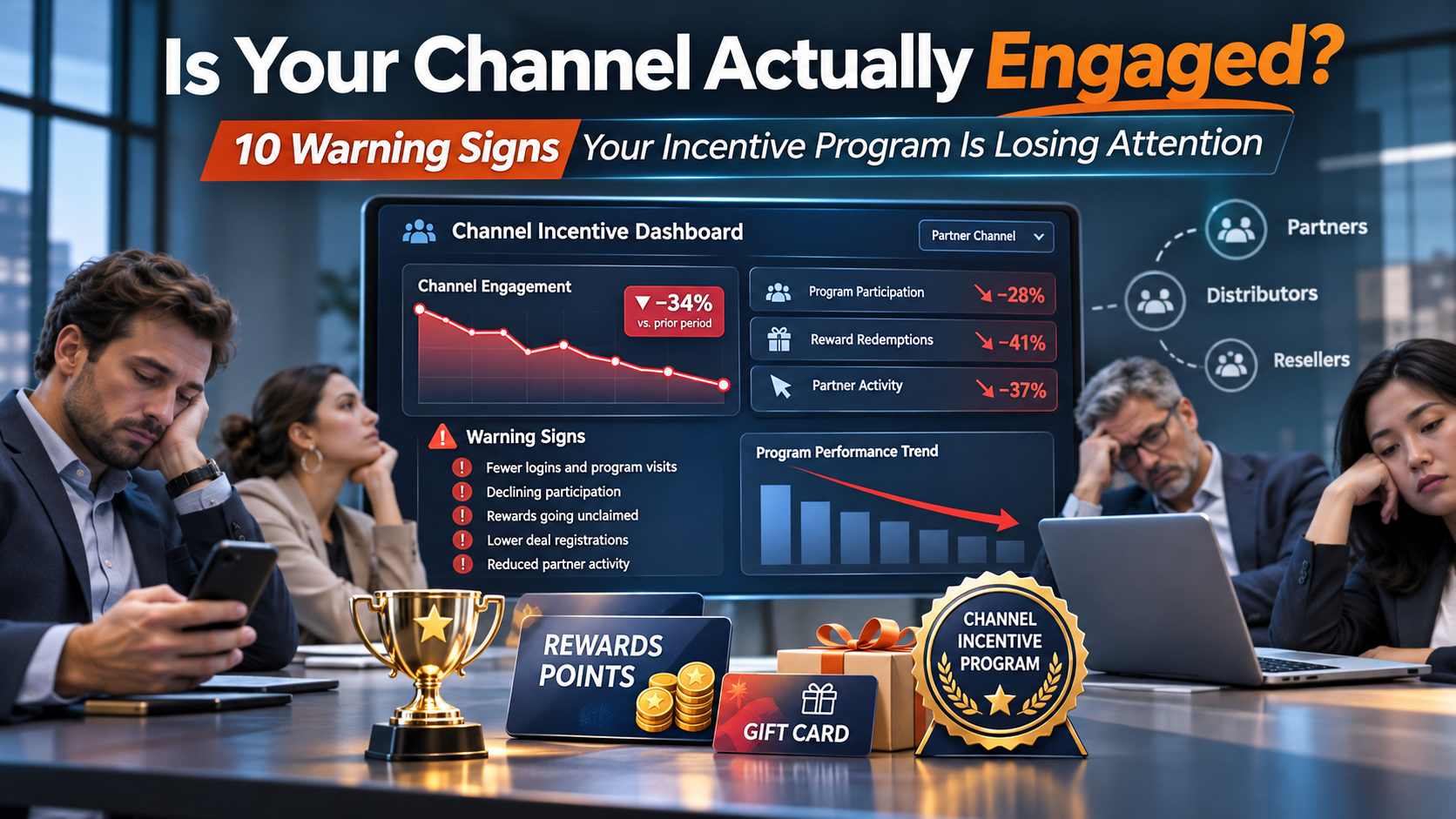
Is Your Channel Actually Engaged? 10 Warning Signs Your Incentive Program Is Losing Attention
Registrations aren’t engagement. Claims aren’t necessarily loyalty. And a spike in activity during a SPIF doesn’t tell you what happens afterward. If your program looks healthy on a dashboard but feels quiet in the field, look for these ten signs.
1. Engagement disappears when a promotion ends
A campaign can work beautifully and still leave a gap. Look at activity in the weeks between offers, not only the peaks.
2. A small group drives nearly everything
If the same top performers generate most claims, ask how much of your eligible audience is actually participating. Don’t assume a particular percentage without checking your own data.
3. New registrants never return
Track registration, first meaningful action and second action. Signing up is only the start.
4. Training doesn’t lead to selling
Completion rates are useful, but do trained participants register more opportunities, recommend products or make sales?
5. Participants visit only to submit claims
A transactional portal can be effective, but it may be missing opportunities for discovery, learning and recognition engagements.
6. Everyone receives the same message
A new sales rep and an experienced seller should not have identical journeys. Segment by role, tenure, activity and relevance.
7. Only the closing seller is visible
Consider the people who source, design, validate, deploy and grow the solution. Their contribution may warrant engagement even when a SPIF does not fit or is not allowed.
8. Your Partner Account Managers can’t explain the program
Ask what is happening this month and which partners need attention. If the internal team is unsure, partners may be too.
9. Clicks substitute for outcomes
Open rates and portal visits tell you something, but not whether behavior changed. Follow the journey to action, outcome, revenue and ROI results.
10. The default answer is “recruit more”
Before expanding the database, understand why existing participants stopped and whether you can give them a relevant reason to return. Saturating an existing partner’s sales team is often an overlooked easy opportunity for engagement and growth.
What to Measure Instead
Start with a baseline: active participants as a share of eligible or registered participants, time to first meaningful action and first earn, repeat participation, training-to-sale conversion, dormant-participant reactivation and claims per active participant. Where data allows, connect these to pipeline, cross-sell, renewals and customer expansion. Break results down by role, partner type, tenure and region so averages don’t hide the story.
Then ask a more useful question than ‘Did activity rise?’ Ask: ‘Who changed behavior, after which engagement, and did it help the business outcomes we wanted?’ A few uncomfortable answers are not failure, they are direction.
Not sure where engagement is breaking down? ChannelAssist can help you look beneath registrations and claims, understand where participation stalls and identify the opportunities already sitting within your partner community.


